Migraine Management
Quarterly physician-led clinical evaluation
Individualized therapeutic recalibration at each encounter
Direct-access physician relationship
Low-glare display activated. Optimized for light-sensitive viewing.
Physician-led diagnosis and management of migraine, headache disorders, and chronic neurologic pain — delivered with clinical precision, academic rigor, and the longitudinal continuity that complex neurological conditions genuinely require.
Comprehensive evaluation of complex neurological presentations — including autoimmune and neuroinflammatory etiologies, refractory symptom constellations, and diagnostic uncertainty cases warranting extended physician oversight.
FDA-approved and clinically validated interventional modalities — OnabotulinumtoxinA (Botox), occipital nerve blocks, CGRP pathway therapies, and physician-administered IV infusion support.
Physician-led diagnosis and longitudinal management of chronic migraine, episodic and transformed migraine, trigeminal autonomic cephalalgias, and refractory headache disorders across the full ICHD-3 classification spectrum.
Continuous, physician-directed management for patients with chronic or recurrent neurological conditions — with individualized care architectures that adapt to clinical response, evolving comorbidities, and long-term neurological trajectory.
Patients managing chronic or high-frequency episodic migraine with meaningful functional impairment across occupational, domestic, or social domains
Those with treatment-refractory headache disorders who have not achieved adequate clinical response through conventional first- or second-line therapies
Patients presenting with complex or undifferentiated neurological symptoms requiring extended clinical investigation — not a compressed, high-throughput diagnostic encounter
Individuals seeking a fundamentally different care model — one built on physician continuity, clinical depth, and outcomes that the conventional healthcare system is not structured to deliver
Chronic Migraine
15 or more headache days per monthChronic migraine means living with 15 or more headache days per month — at least 8 of which have the quality of a true migraine attack. This is not simply "bad headaches." It is a recognized neurological condition that rewires pain pathways over time. Work, sleep, relationships, and daily life are all affected. Many patients who come to us have tried two, three, or four medications without finding lasting relief. That history doesn't disqualify you — it's exactly why a physician who specializes in this condition matters.
Insurance-accepted for this diagnosis
Episodic Migraine
Fewer than 15 days/month, but still severely disablingEpisodic migraine typically means fewer than 15 headache days per month — but within those attacks, the experience can be completely disabling: one-sided pain, nausea, and an extreme sensitivity to light and sound that can make any room feel impossible to be in. We also evaluate patients whose migraines are increasing in frequency. Early, precise intervention is one of the most effective ways to prevent episodic migraine from becoming chronic.
Preventive treatment often covered by insurance
Cluster Headache
Among the most painful conditions in medicineCluster headaches are one of the most severe pain conditions documented in medicine — frequently described by patients who have also experienced childbirth or kidney stones as distinctly worse than either. They strike on one side of the head, usually around or behind the eye, and may occur multiple times a day in cycles lasting weeks or months. They are often accompanied by eye redness, tearing, and nasal symptoms on the same side. We treat this condition with the urgency and precision it demands.
Specialist evaluation is essential for this diagnosis
Tension-Type Headache
The most common headache type — still worth treating properlyTension-type headaches are the most common headache disorder — a steady, pressing pain that wraps around the head, often described as a tight band or a weight pressing down. While generally less intense than migraine, frequent or chronic tension headaches erode quality of life significantly, especially when they occur alongside or overlap with migraine. We evaluate both patterns together, because they often share root causes and respond to the same treatments.
Often coexists with migraine — combined evaluation recommended
Neuralgia & Facial Pain
Shooting or burning pain along the nerves of the face or headNeuralgia refers to pain that originates from a specific nerve rather than from muscle tension or vascular changes. In the head and face, this includes trigeminal neuralgia (sharp, electric-shock pain along the face) and occipital neuralgia (shooting pain from the base of the skull up through the scalp). These conditions are frequently misidentified as migraine or sinus headache and undertreated as a result. Precisely placed nerve blocks — a clinical strength of this practice — can provide relief when general pain medications have failed.
Nerve blocks often provide rapid relief in these cases
Post-Traumatic Headache
Headache that begins after a head injury or concussionPost-traumatic headache develops in the days or weeks following a head injury, concussion, or whiplash — and can persist for months or years when not properly evaluated and treated. It often mimics migraine or tension headache but may also present as an entirely new pattern. Post-traumatic headache is real, neurological in origin, and one of the most undertreated conditions in headache medicine. We provide thorough evaluation and a personalized treatment plan designed around your specific post-injury presentation.
Often covered by auto or workers' compensation insurance
Migraine rarely follows a linear course. We approach every patient relationship as an evolving clinical partnership — continuously reassessing treatment efficacy and recalibrating based on real-world response data.
An initial diagnosis represents a working clinical hypothesis, not a fixed conclusion. As objective and subjective data accumulate across visits, we refine our diagnostic formulation and modify treatment strategy accordingly.
No patient is maintained on a therapeutic regimen that has failed to yield meaningful clinical response. We track quantifiable outcomes at every interval and recalibrate proactively — not reactively.
Escalation decisions are governed by clinical evidence, validated safety profiles, and longitudinal neurological risk calculus — not by patient preference or prevailing therapeutic trend.
FDA-approved OnabotulinumtoxinA therapy delivered across the standardized 31-site head and neck injection paradigm at 12-week intervals. Among the most rigorously validated preventive therapies for chronic migraine, with demonstrated efficacy across multiple randomized controlled trials.
Precision anesthetic nerve blocks targeting the greater and lesser occipital nerves — capable of interrupting an acute migraine cycle and providing sustained relief in cervicogenic, occipital, and cervicotrigeminal headache presentations.
Targeted myofascial injection therapy addressing pericranial and cervical trigger zones implicated in headache amplification and chronification — an evidence-supported adjunct to comprehensive migraine management.
FDA-cleared, non-pharmacologic neuromodulatory devices for acute and preventive migraine management — offering an evidence-based therapeutic avenue for patients with pharmacological intolerance, contraindication, or inadequate first-line response.
Physician-supervised IV infusion therapy encompassing acute migraine rescue agents, magnesium sulfate, NAD+ neurological support, and individualized adjunctive formulations — indicated for refractory, high-frequency, and perioperative migraine presentations.
Quarterly physician-led clinical evaluation
Individualized therapeutic recalibration at each encounter
Direct-access physician relationship
High-frequency, close-interval clinical monitoring
Botox every 12 weeks
CGRP pathway agent coordination and optimization
Breakthrough support access
IV migraine rescue therapy
Magnesium + NAD+ support
Physician-supervised
Your first visit is designed for depth, not efficiency. We review your complete symptom chronology, therapeutic history, current medications, and the functional burden your condition carries — before forming any clinical impression.
Applying ICHD-3 diagnostic criteria, we classify your specific headache phenotype, neurological profile, and clinical burden — establishing a precise diagnostic foundation and a defined therapeutic direction.
Your treatment plan is constructed from evidence-validated modalities selected specifically for your diagnosis, clinical history, and therapeutic goals — not a templated pathway, but a clinical design built for your case.
We monitor outcomes at defined intervals, reviewing your clinical response and executing the therapeutic adjustments your case requires. Neurological care, at this level, is a sustained relationship — not a single clinical encounter.
Every therapeutic recommendation is preceded by a thorough, individualized clinical evaluation
Treatment decisions are governed by clinical evidence, validated safety data, and long-term neurological risk calculus — not by patient preference or trend-driven prescribing
We adhere to conservative therapeutic sequencing as a foundational standard, escalating only when objective clinical indicators support doing so
Clinical restraint is part of our care philosophy
Most patients arrive after exhausting standard therapeutic options without achieving durable relief. Our clinical objective is specific and measurable: a meaningful, sustained reduction in migraine frequency, functional burden, and neurological suffering — with outcomes that hold over time.
A clinically significant reduction in migraine days per month
Restored occupational and functional capacity across professional, domestic, and social domains
Stable, longitudinally maintained symptom control
An ongoing clinical partnership with a physician of record who maintains comprehensive familiarity with your case
Neurological health that improves — and holds — over time
The same physician at every visit — someone who knows your full history, not just your chart
Appointments designed around complex cases — unhurried, attentive, and genuinely thorough
Treatment refinements made over time, based on how you’re actually responding
A practice small enough to know you, with the clinical depth to make a real difference
Care that continues long after the first improvement — because lasting results take time
Our clinicians specialize in migraine medicine and neurological care. Complex conditions deserve unhurried attention — and that is precisely what every patient relationship here is built on.
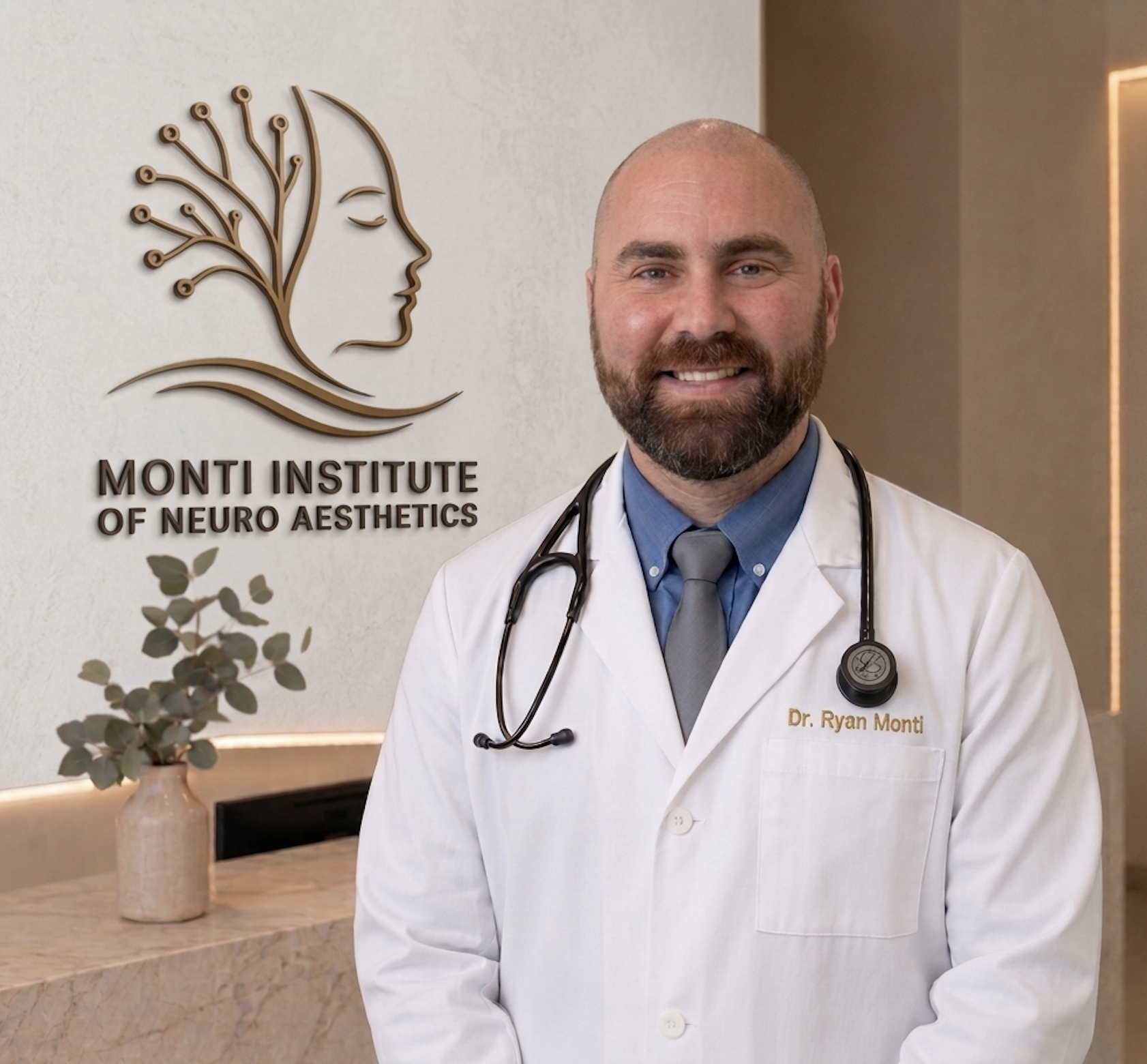
MD · Board-Certified in Internal Medicine
Dr. Monti founded Monti Institute on a conviction born from clinical practice: that chronic migraine and complex neurological disorders require more than a compressed appointment and a formulaic prescription. A board-certified physician in Internal Medicine focusing on migraine medicine and medical aesthetics, he has built a practice that delivers the clinical depth, continuity, and individualized rigor this patient population deserves and rarely receives.
PA-C · Physician Associate
Sean Kump is a physician associate with concentrated expertise in migraine therapeutics, interventional headache medicine, and complex neurological case management. Known for clinical precision and exceptional attentiveness, he functions as an indispensable clinical partner to Dr. Monti — extending the same standard of unhurried, physician-grade care across every patient relationship.
FNP-BC · Advanced Practice Provider
Zack Ballingham is a board-certified Family Nurse Practitioner with over 15 years of experience in acute care and hospital medicine. A native Nevadan and graduate of the University of Nevada, Reno, he brings deep expertise in the management of complex medical conditions, inpatient clinical decision-making, and multidisciplinary care coordination. His approach is grounded in evidence-based practice, compassionate service, and an unwavering commitment to patient-centered outcomes.
yjk
MSN, APRN, CPNP-PC
Morgan Melton is a board-certified nurse practitioner with specialized expertise in neurological wellness and integrative care. Her practice centers on the intersection of neurology and whole-patient health — delivering attentive, evidence-informed care with a long-term orientation that complements the physician-led model of the Institute.
Director of Operations
Megan Phares manages the clinical operations at Monti Institute, overseeing specialized workflows and ensuring an unhurried, pristine patient experience across all advanced therapeutics.
Full clinical detail for all neurological interventions offered at the Institute. Treatment selection is determined by diagnostic evaluation, not patient preference.
OnabotulinumtoxinA, 31-site protocol, chronic migraine indication (15+ headache days/month)
155–195 units head/neck distribution
12-week cycle
Response assessed after 2 cycles
Chronic migraine candidates only
Local anesthetic ± steroid per indication
Greater/lesser occipital nerves
Migraine rescue + neuralgia
Repeat as clinically indicated
Suboccipital, trapezius, temporalis, SCM
3–6 sites/session
Adjunct to broader migraine care
Non-pharmacologic approaches for refractory migraine
External trigeminal stimulation
TENS-based adjunct therapy
Remote neuromodulation
Magnesium, NAD+, DHE, ketorolac-based protocols
Physician-supervised
Individualized composition
Acute + preventive support
Erenumab, Fremanezumab, Galcanezumab
Monthly or quarterly dosing
3-month response evaluation
Episodic + chronic migraine
Quarterly evaluation
Direct physician access
Botox q12 weeks
CGRP coordination
IV therapy per indication
Quarterly review
Coverage varies by plan and service.
Precision medicine requires precise language. The following definitions are provided to support informed, substantive conversations between patient and physician — not to replace one.
The Superficial Musculoaponeurotic System (SMAS) is the fibromuscular layer that connects the facial muscles to the overlying dermis, functioning as the structural scaffold of the mid- and lower face. SMAS integrity refers to the tensile strength, cohesion, and vertical positioning of this anatomical layer.
As the SMAS loses integrity with age — through a process of fibrous thinning, gravitational descent, and ligamentous attenuation — the overlying soft tissue structures migrate inferiorly, producing jowl formation, nasolabial deepening, and effacement of the mandibular border. SMAS integrity is assessed as part of every comprehensive facial evaluation at this practice.
Bony resorption refers to the progressive reduction in craniofacial skeletal volume that occurs throughout adult life. The facial skeleton is not a static structure — the maxilla, zygoma, mandible, and orbital rims undergo measurable volumetric loss beginning in the third decade and accelerating after menopause in women.
The clinical consequence is a reduction in the osseous foundation upon which soft tissue structures rest. As the skeletal scaffold recedes, overlying skin and fat compartments lose their anatomical support, producing the characteristic signs of facial aging that are not attributable to soft tissue changes alone. Correcting soft tissue without accounting for underlying bony resorption produces results that are volumetrically incongruent with the patient’s skeletal architecture.
Calcitonin Gene-Related Peptide (CGRP) is a neuropeptide released from trigeminal nerve terminals that plays a central role in migraine pathophysiology. During a migraine attack, CGRP is released in elevated concentrations from both peripheral trigeminal afferents and central neurons, producing vasodilation, neurogenic inflammation, and the sensitization of pain pathways that characterize the full migraine episode.
The CGRP pathway has become one of the most significant pharmacological targets in modern migraine medicine. CGRP receptor antagonists (gepants) block the peptide’s action at the receptor level; anti-CGRP monoclonal antibodies target the peptide or its receptor directly, providing monthly or quarterly preventive coverage with a mechanism of action specific to migraine biology.
Regenerative biostimulation refers to a class of aesthetic interventions that do not simply add volume or block neuromuscular activity, but instead activate the body’s intrinsic cellular mechanisms of collagen synthesis, dermal matrix renewal, and structural tissue regeneration. The result is improvement in skin quality, firmness, and structural integrity that develops progressively over months rather than immediately.
Primary biostimulatory agents include Poly-L-lactic acid (PLLA, marketed as Sculptra), calcium hydroxylapatite (CaHA, marketed as Radiesse), and polynucleotide complexes. Each activates fibroblast activity through distinct mechanisms, producing neocollagenesis — the synthesis of new collagen within the treated dermis and subdermis — rather than mechanical displacement of existing tissue structures.
A documented clinical indication is a formally recorded, evidence-based rationale that justifies a specific medical or aesthetic intervention for a specific patient at a specific point in their clinical course. At Monti Institute, no procedure — neurological or aesthetic — is performed without one.
In neurological practice, a documented clinical indication for Botox for chronic migraine, for example, requires a confirmed diagnosis of chronic migraine (≥15 headache days per month, ≥8 of which meet migraine criteria), documented inadequacy of prior preventive treatments, and physician-recorded clinical reasoning supporting this intervention for this patient.
In aesthetic practice, it means that the choice of treatment, product, volume, and injection site is recorded in the clinical record with a specific anatomical rationale — not simply selected from a standard menu. This standard distinguishes physician-led aesthetic care from high-volume aesthetic practice.